


Shop Stats: Insights into Parts Ordering & How to Improve the Process
July 01, 2026
Industry Trends & Insights
Shop Tips & Best Practices
6 min read
A shop’s parts ordering process rarely gets the spotlight, but it quietly shapes almost everything else that happens on the floor. A tight, well-run process keeps technicians working and customers happy. A disorganized one creates delays, mistakes, and frustration that ripple through the whole shop. Understanding who owns that process, what drives it, and where shops are finding efficiency offers a clear starting point for tightening the whole process up. We recently surveyed ~700 repair shops of all sizes, and here’s a look at what those shops have to say about who orders parts, what drives those decisions, and how the process is evolving.
Who’s Actually Ordering Parts
Parts ordering rarely lives with just one person. When we asked shops about who orders parts, half of the respondents said service writers and advisors. This was followed by shop owners, then parts managers, and shop managers.
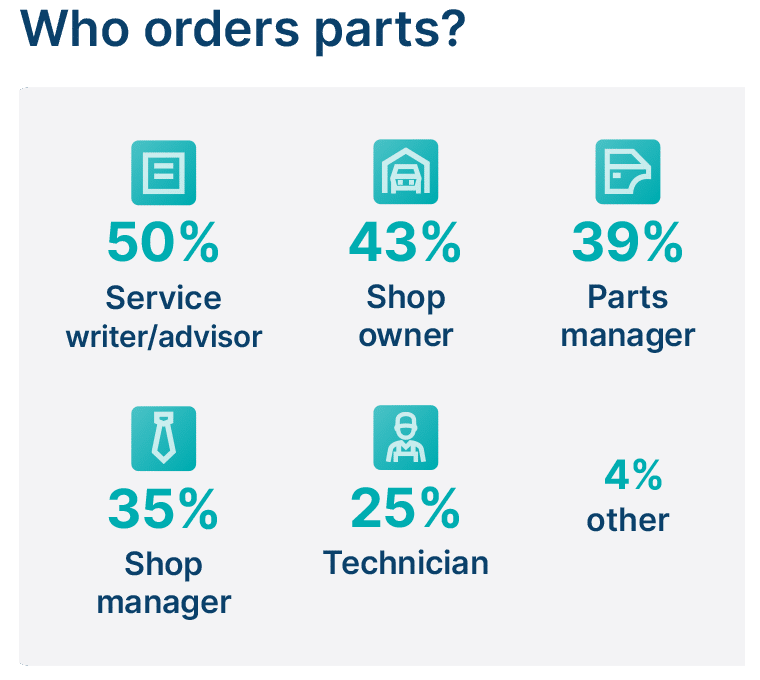
This illustrates that service writers and advisors are most likely to own the day-to-day task of parts sourcing, but shop owners, parts managers, shop managers, and technicians all play some role in the process too.
That shared responsibility makes sense given how many moving pieces are involved, but it also means clear communication between roles matters just as much as the ordering process itself.
While service writers and advisors tend to place the actual orders, shop owners are most likely to shape which parts get ordered in the first place. Survey results show that parts managers and shop managers round out the group of people steering those decisions. Any shop looking to tighten the parts sourcing process should start by assessing who drives these decisions as well as who is responsible for executing them.

What Factors into the Decision
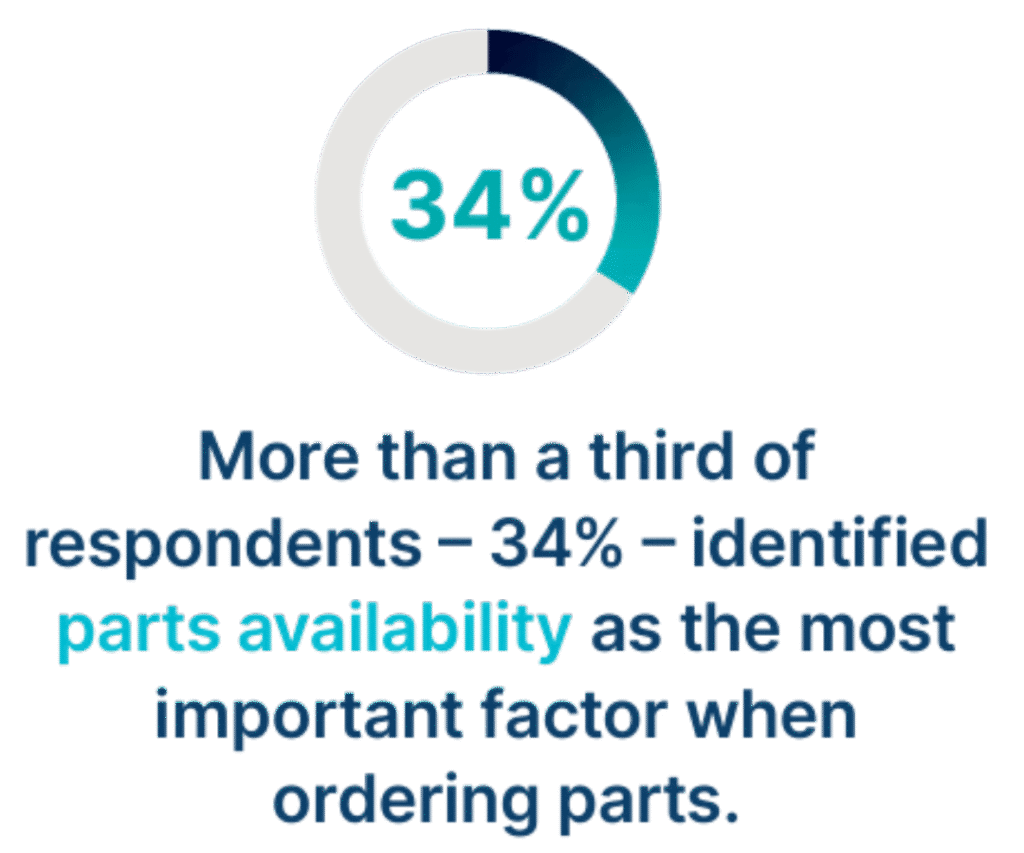
When it comes to choosing parts, availability consistently outweighs other factors. More than a third of survey respondents said that parts availability was the most important factor when ordering parts.
When a part isn’t available, no price point fixes that problem. Likewise, shops that prioritize supplier relationships and inventory visibility put themselves in a better position to avoid the delays that availability gaps create.
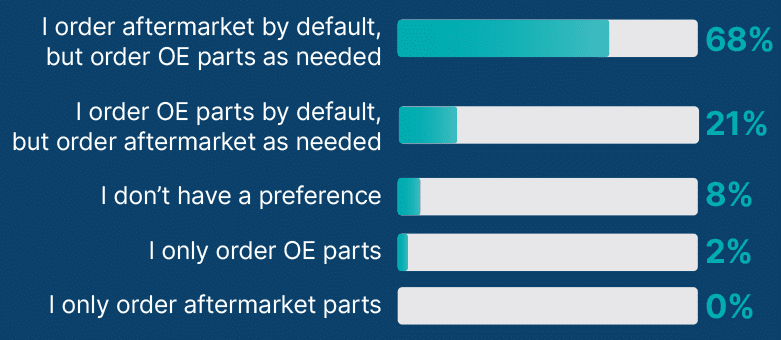
Part type also plays a role here as well. Most shops default to aftermarket parts and pull OE parts as needed, a pattern that reflects a broader push to balance cost control with quality and fit.
Very few shops rely exclusively on one part type, which points to the value of flexibility over rigid sourcing rules.
How Shops Place Orders
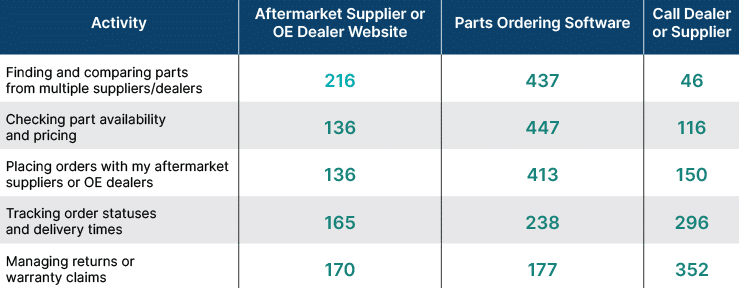
When we asked shops how they actually place their parts orders, ordering directly from supplier websites was identified as the most common method, one followed closely by parts ordering software solutions, like PartsTech or RepairLink. While phone orders haven’t disappeared (plenty of shops still rely on them) the shift toward digital ordering channels reflects a broader push for speed and accuracy in the ordering process.
How Many Suppliers Shops Have
As identified in the survey, the full ordering workflow involves more than simply picking a supplier. Finding and comparing parts across suppliers, checking availability and pricing, tracking order status, and managing returns or warranty claims all add time and complexity.
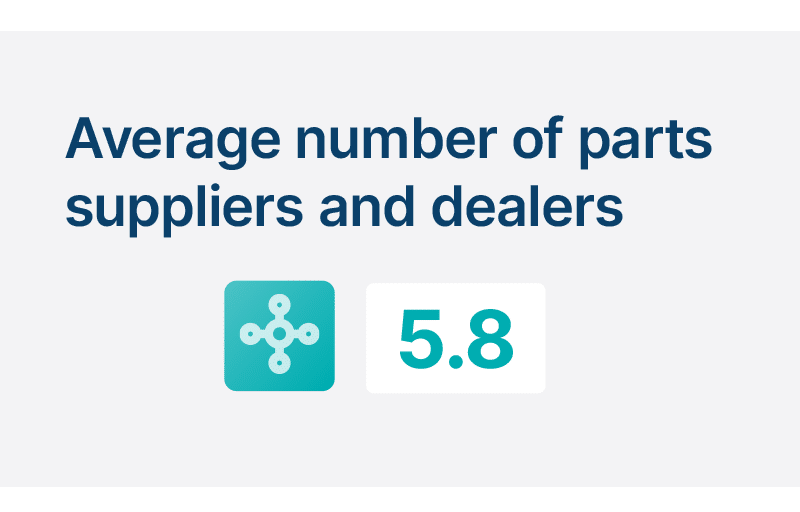
Shops that manage relationships with multiple suppliers, typically close to six on average, gain flexibility, but that flexibility only pays off if the shop has a system for tracking orders across all of them.
Get ALL your suppliers in one lookup on PartsTech. Create your free account today!
Click HERE to Learn More & Get Started
Customer Pushback for Parts
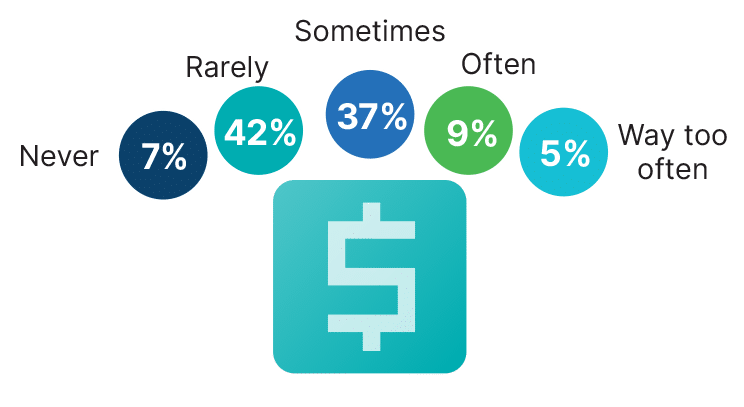
Customer pushback on pricing turns out to be less common than some might expect. When we asked shops about this, they responded that most customers rarely or never question the cost of parts.
This suggests that trust and transparency around pricing are generally holding steady even as costs rise industry wide.
Shop Takeaway
A shop’s parts ordering process is one of the most fixable sources of inefficiency in the building, and small changes tend to pay off fast.
Here are a few steps shops can consider when looking to improve their parts ordering process:
- Clarify ownership. Make sure everyone involved in parts decisions, from service writers to the shop owner, is working with the same priorities and information.
- Prioritize availability. Parts availability drives more ordering decisions than price, so strong supplier relationships and inventory visibility matter more than chasing the lowest cost.
- Modernize the process. Shops using supplier websites and aggregator software alongside phone orders are better positioned to track orders, manage multiple suppliers, and cut down on delays.
The shops getting the most out of their parts process treat it as a system, not a series of one-off decisions. Tightening that system, even in small ways, adds up to fewer delays, fewer frustrated customers, and a more resilient business.
Make sourcing parts the easy part of your day & save 15 minutes per RO with PartsTech! To learn more, connect with a PartsTech pro. Complete the form below and we will be in touch.

You may also like
Shop Stats: The Next 5 Years and the Biggest Challenges Ahead
The shops that come out ahead in the next five years won’t be the ones that avoided the industry’s challenges – they’ll be the ones that saw …
Find Out More

The Looming Succession Crisis & What Smart Shops Are Doing About It
OEC’s U.S. General Auto Repair Shop Survey Report, drawn from nearly 700 shops surveyed in September 2025, puts hard numbers behind what many owners already sense on …
Find Out More

Shop Stats: The Tech Behind Top Shops
Below is an excerpt from the OEC U.S. General Auto Repair Shop Survey Report. Inherited from PartsTech, and in the spirit of the annual State of General …
Find Out More